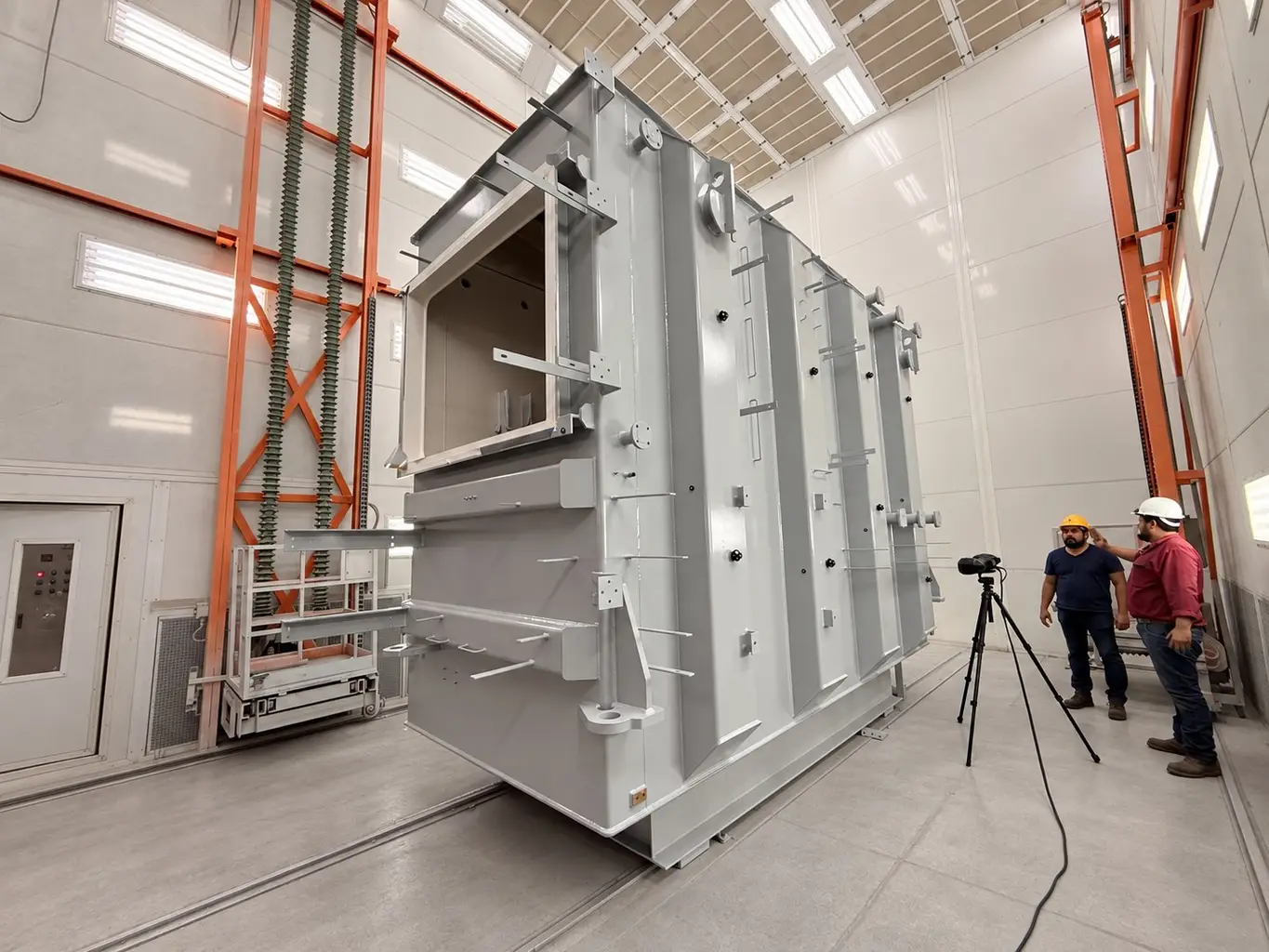
For OEM programs, industrial steel painting services are not a final cosmetic step. The coating process affects corrosion performance, assembly fit, part identification, handling, and shipment readiness. On heavy truck frame rails, welded subassemblies, transformer tanks, rail components, and data center structures, painting must be planned alongside cutting, forming, welding, inspection, and logistics.
A coating can only perform as specified when the steel substrate, weld condition, surface preparation, paint system, cure requirements, and handling method are aligned. Purchasing and engineering teams should therefore evaluate painting as part of the full fabrication process rather than as a separate outsourced operation added after production.
What industrial steel painting services must control
The primary purpose of an industrial coating is to protect steel from its expected service environment. The appropriate system depends on whether the component will see moisture, salt exposure, chemicals, heat, UV exposure, abrasion, or an indoor controlled environment. It also depends on the customer’s drawing, approved coating specification, color requirement, film-build range, and test requirements.
The coating supplier should have clear instructions for the intended system before production begins. A general paint callout may not be enough for a structural assembly with long-term corrosion requirements. The required preparation level, primer type, topcoat, dry film thickness, cure method, and touch-up process all influence the result.
For heavy fabrications, coating requirements also affect manufacturing decisions earlier in the route. Closed sections may need venting or drain provisions. Areas intended for grounding, welding, bolted joints, machining, or electrical contact may need masking or an approved uncoated condition. Weld spatter, sharp edges, weld seams, and inaccessible internal surfaces require review before the first production part reaches the paint stage.
Surface preparation determines coating performance
Paint adheres to the prepared surface, not simply to the steel part. Oil, cutting fluid, mill scale, oxidation, weld residue, moisture, and shop contaminants can reduce adhesion and create early coating failures. Proper surface preparation is therefore a production control point, not an optional cleanup activity.
The required preparation method depends on the coating specification and end use. A part may require solvent cleaning, mechanical cleaning, abrasive blasting, phosphate treatment, or another documented process. The selected method must remove contaminants while producing the required surface condition for the specified coating system.
Heavy welded assemblies need particular attention. Weld seams can retain slag or spatter, and sharp edges may not hold paint film as consistently as rounded edges. If a customer requires edge treatment, weld dressing, or a particular surface-preparation standard, those requirements should appear in the fabrication package and inspection plan. Waiting until paint inspection to identify an edge or weld issue can create rework, schedule disruption, and unnecessary material handling.
Fabrication quality affects paint quality
A painted assembly can conceal surface conditions that should have been addressed during fabrication inspection. That is why dimensional verification and welding quality should occur before coating whenever practical. Once paint is applied, correcting a weld discontinuity, missed feature, or out-of-tolerance condition becomes more expensive and may require stripping and recoating.
For long rails and large subassemblies, maintaining part geometry through forming, welding, and material movement matters just as much as coating coverage. Equipment capacity should fit the component. A 53-foot, 2,400-ton CNC press brake and a 16-meter fiber laser bed, for example, support fabrication of long steel components while reducing the need to create a large structure from multiple shorter sections. The final coating process still requires rack, fixture, and handling plans that protect both the part and the applied finish.
Match the coating system to the application
There is no single best paint system for all fabricated steel. The correct choice depends on the service environment, substrate condition, required appearance, corrosion target, production volume, and customer specification.
Liquid coating systems can suit large components, complex geometries, field touch-up needs, and multi-layer protection requirements. Specialty primers and topcoats may be specified for chemical resistance, high-temperature service, electrical requirements, or demanding outdoor exposure.
The trade-off is practical. A higher-performance system may add preparation steps, cure time, inspection requirements, and cost. A simpler system may be appropriate for protected indoor service but insufficient for severe outdoor exposure. Engineering teams should define the actual operating environment rather than selecting a coating only by appearance or an assumed corrosion category.
For transformer tanks and electrical enclosures, coating selection may need to account for outdoor exposure, thermal cycling, attachment points, and customer color standards. Heavy truck and freight rail components may require consideration of road debris, weather, repeated cleaning, and areas subject to assembly wear. Data center structures may prioritize consistent finish, protected storage, and compatibility with installation requirements. The answer depends on the part’s duty cycle and the governing customer specification.
Inspection should be planned before painting begins
An effective paint inspection process verifies more than final color. It confirms that the required process was followed and that the finished coating meets documented acceptance criteria. The specific checks should be based on the approved specification, but commonly include surface condition before coating, coverage, dry film thickness, cure verification where applicable, adhesion testing when required, visual defects, and protected or masked areas.
Traceability is especially valuable for OEM supply programs. Lot identification can connect the finished assembly to material records, fabrication routing, weld inspection, coating batch information, inspection results, and shipment documentation. This level of control helps quality teams investigate a nonconformance without relying on incomplete manual records.
The best inspection point is often before the part leaves the manufacturing facility. However, production teams should recognize that large painted structures can be damaged during staging, loading, transport, and unloading. Protective packaging, rack contact locations, lifting points, and touch-up instructions need to be considered as part of the delivery plan.
Avoid common late-stage problems
Many coating issues originate from incomplete information at quotation or launch. A supplier may receive a drawing that identifies a paint color but does not state the required preparation, system manufacturer, film-build range, or inspection standard. Another common issue is a late request to mask machined holes, threaded features, grounding surfaces, or joint interfaces after parts are already in production.
These problems can be reduced through an early technical review. The review should confirm the paint specification revision, corrosion expectations, visual standard, masking needs, handling points, packaging requirements, and whether field touch-up is allowed. If the program includes first-article approval or customer samples, those milestones should be scheduled before full production release.
Coordinating painting with heavy steel production
Painting works best when it is integrated with the manufacturing route. The manufacturing plan should define which fabrication, welding, inspection, and machining steps precede coating and which, if any, follow it. Machined interfaces and any post-coating operations require appropriate protection and agreed touch-up procedures.
For high-volume heavy steel programs, production planning must also account for part size, component weight, batch size, staging area, cure time, and shipping sequence. A paint process that is technically acceptable but cannot support the required production flow can become the constraint that delays the entire assembly program.
IONSA’s fabrication capabilities are relevant before coating begins: 150+ welding stations, in-house AWS Certified Welding Inspector support, Creaform dimensional inspection equipment, and MIETrak ERP provide controls that can support consistent upstream part preparation and traceability. Coating requirements should be reviewed against the complete fabrication and delivery plan so that the finished component arrives ready for its next assembly operation.
Information to provide for an engineering review
A productive quotation and manufacturability review starts with complete technical input. Provide current drawings and CAD files where available, annual and release quantities, component dimensions and weight, material grade, weld requirements, paint specification, color, masking details, inspection requirements, packaging expectations, and required delivery schedule.
For assemblies with long members, enclosed sections, machined features, or customer-installed hardware, include those details early. They may affect surface preparation access, coating coverage, racking, and final handling. If the coating system has been approved by the end customer, provide the applicable revision and any required documentation format.
The practical objective is not simply to apply paint to steel. It is to deliver a fabricated, inspected, protected component that fits the customer’s assembly process and performs in its intended environment. A complete technical review before production gives engineering, quality, and purchasing teams the best opportunity to prevent coating-related rework after the steel has already moved through the shop.
IEEE C57.12.28 and enclosure coating specifications
Where the project specification calls for IEEE C57.12.28, coating requirements must be reviewed against its scope: pad-mounted equipment enclosure integrity. IONSA can review the specified coating system, preparation, acceptance testing, and records with the OEM. This is a project-specific requirement, not a blanket IEEE certification of all fabricated products. The applicable edition and acceptance criteria should be identified in the quote package.
Discuss your production requirements
Explore IONSA’s Transformer tank fabrication. Request a quote and upload your drawing with the current revision, material, quantities, overall dimensions, component weight, delivery schedule, and required inspection records. IONSA will review drawing-specific feasibility before confirming tolerances, capacity, or lead time.