A long heavy truck frame rail can appear straightforward on a purchase order, yet plate processing lead times can change quickly when material availability, forming sequence, weld access, and inspection requirements are not defined early. For OEM purchasing and engineering teams, the useful question is not simply, «What is the lead time?» It is, «What work is required to make this drawing production-ready, and what information controls each step?»
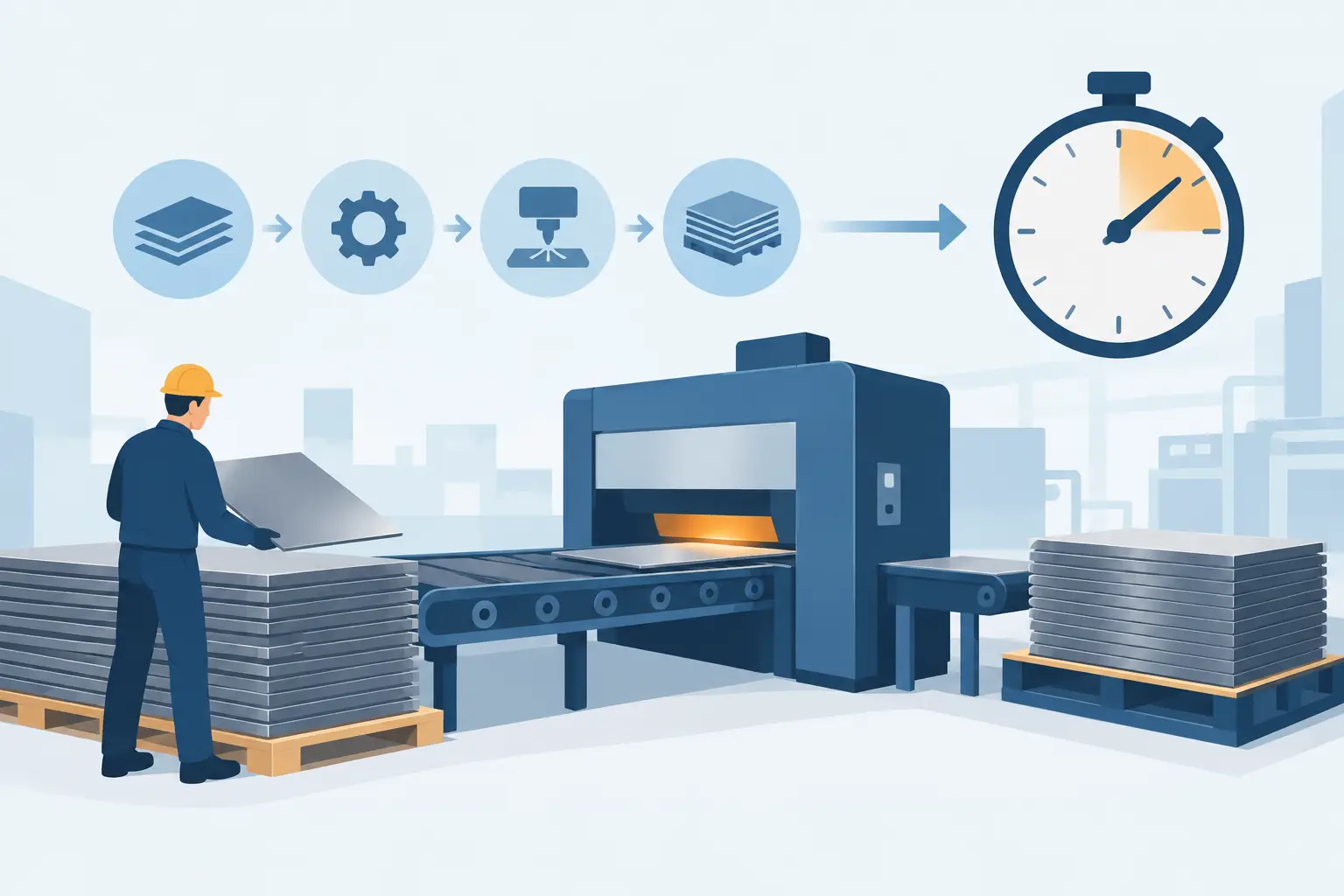
For heavy truck frame rails and heavy truck subassemblies, lead time is the combined result of material planning, cutting, forming, fit-up, welding, inspection, and shipment coordination. Transformer tanks, large freight rail components, and data center structures follow the same basic logic, but each introduces different constraints related to plate format, part geometry, weld volume, coating requirements, or documentation.
What determines plate processing lead times
A quoted lead time should reflect the actual manufacturing route rather than a standard number applied to every steel part. The primary inputs are the material specification and availability, plate thickness and dimensions, drawing revision status, quantity, required operations, inspection plan, and delivery schedule.
Material is often the first variable. A fabricator needs to confirm the specified grade, plate size, certification requirements, and whether the order calls for customer-furnished or supplier-procured steel. Large-format plate or a specific grade may require different procurement planning than commonly stocked material. If alternates are acceptable, that decision should be documented by the customer before production scheduling begins.
Part geometry then determines which processes are needed and in what order. A long rail may require laser cutting, multiple bends, machined features, welded brackets, and final dimensional inspection. A transformer tank panel may require cutouts, formed flanges, weld preparation, and an agreed coating process. Lead time cannot be evaluated accurately from part length or total weight alone.
Quantity matters as well. A prototype, a low-volume service order, and a recurring production release may use the same equipment but require different planning. Repeat production can benefit from established routing, fixtures, approved weld procedures, and known inspection points. A new program may need added engineering review before those controls are established.
Plate processing lead times start before cutting
The most preventable delay occurs before a plate reaches the cutting table. Incomplete drawings, conflicting notes, missing material callouts, or undefined inspection requirements force questions that stop release to production. These are not administrative details. They determine how a part is manufactured and accepted.
For a practical manufacturing review, provide the current drawing revision, 3D model when available, bill of materials, annual or release quantity, required delivery date, and destination. Include part dimensions and weight, particularly for large fabrications that affect material handling, fixturing, welding sequence, and transportation planning.
Quality requirements should be specific. For example, identify critical dimensions, datum references, weld symbols, nondestructive examination requirements when applicable, required records, and any customer-specific coating standard. Applicable enclosure integrity or coating requirements for pad-mounted equipment should be stated by the customer rather than assumed from a general reference to IEEE C57.12.28.
Early clarification is especially useful for heavy subassemblies. A fabricated assembly can have a reasonable cutting and forming path but still require a longer overall schedule if its mating interfaces, weld sequence, or measurement approach are unresolved. Resolving those items before release helps protect both the quoted schedule and the production plan.
Equipment capacity affects routing, not every drawing
Equipment capability can reduce handling and process transfers for suitable parts, but machine ratings do not establish drawing-specific feasibility. The drawing, material condition, bend geometry, tooling, part weight, and required tolerances must still be reviewed.
IONSA operates a 30 kW fiber laser with a 16-meter cutting bed and a 2,400-ton CNC press brake with 53 feet of forming length. For long chassis rails, rail structures, and large formed plate components, those capacities can support a manufacturing route with fewer interruptions than a process that requires sections to be cut or formed at separate locations. Whether a particular component fits the equipment envelope or can achieve the required formed geometry is determined during engineering review.
The same consideration applies to machining and welding. Hole patterns, edge preparation, machined interfaces, and assembly access affect the order of operations. If a feature must be machined after welding to maintain its relationship to a critical datum, that requirement needs to be built into the routing. If it can be completed before assembly, the schedule may be different.
For buyers, the relevant discussion is not just press brake tonnage or laser power. It is whether the supplier can route the entire part family through compatible cutting, forming, welding, and inspection processes without creating avoidable queue time between operations.
Welding and inspection are schedule-critical operations
Heavy truck subassemblies often have more schedule sensitivity in welding and inspection than in plate cutting. Weld volume, joint access, distortion control, fixture design, required sequence, and post-weld dimensional checks all affect production flow.
IONSA has more than 150 welding stations and an in-house AWS Certified Welding Inspector. This supports production planning and welding quality oversight, but it does not mean every weld receives independent third-party certification. The required weld acceptance criteria, inspection points, and documentation must be defined for the program.
An inspection plan should be proportionate to the function of the component. A frame rail or structural subassembly may need verification of rail length, hole location, formed profile, bracket position, and weld-related distortion. Creaform dimensional inspection equipment can support dimensional inspection under an agreed plan. Required measurement coverage, reporting format, and acceptance criteria should be agreed before release, particularly when parts interface with OEM assembly fixtures.
AAR M-1003 quality assurance certification may also be relevant to certain freight rail programs. Its applicability depends on the defined facility and activity scope, as well as the customer requirement. Buyers should identify any rail-specific quality provisions during quotation rather than adding them after the production route has been established.
How to reduce lead-time risk without sacrificing control
The strongest approach is to separate urgent demand from incomplete definition. Expediting a release can be appropriate when the drawing package, material decision, and inspection requirements are stable. It is less effective when key decisions are still open, because production may begin without a clear basis for acceptance.
Purchasing teams can improve schedule reliability by aligning forecasted demand with release timing and by identifying the parts most likely to require large-format plate, long forming, extensive welding, or special inspection. Manufacturing engineers can support the process by clearly identifying critical-to-function features instead of applying the same tight requirement across noncritical geometry. Quality teams can define records and inspection evidence early enough for the supplier to include them in the routing.
Production records managed through MIETrak ERP can support the manufacturing process, though traceability depth is program-specific. If heat traceability, inspection records, traveler requirements, or customer portal reporting are required, state that expectation with the request for quote. The supplier can then evaluate the documentation path alongside the physical manufacturing steps.
A schedule should also account for approval gates. First-article review, fixture approval, weld sample approval, or customer inspection can be necessary controls, but each can affect the release path. Defining responsibility and response timing for those gates prevents completed work from waiting for an approval that was not included in the original plan.
Build the quote around the real production route
Plate processing lead times are most predictable when the buyer provides a complete technical package and the fabricator reviews the actual sequence of material, cutting, forming, welding, inspection, and delivery. That is particularly important for long heavy truck frame rails and fabricated subassemblies, where a single change to a bend, interface, or weld detail can affect several operations.
For an engineering-informed review, submit drawings, material specifications, quantity, overall dimensions, component weight, required schedule, and inspection requirements through IONSA’s Request a Quote process. A clear package gives the manufacturing team the information needed to evaluate the drawing, establish a realistic route, and identify schedule risks before they become production delays.